


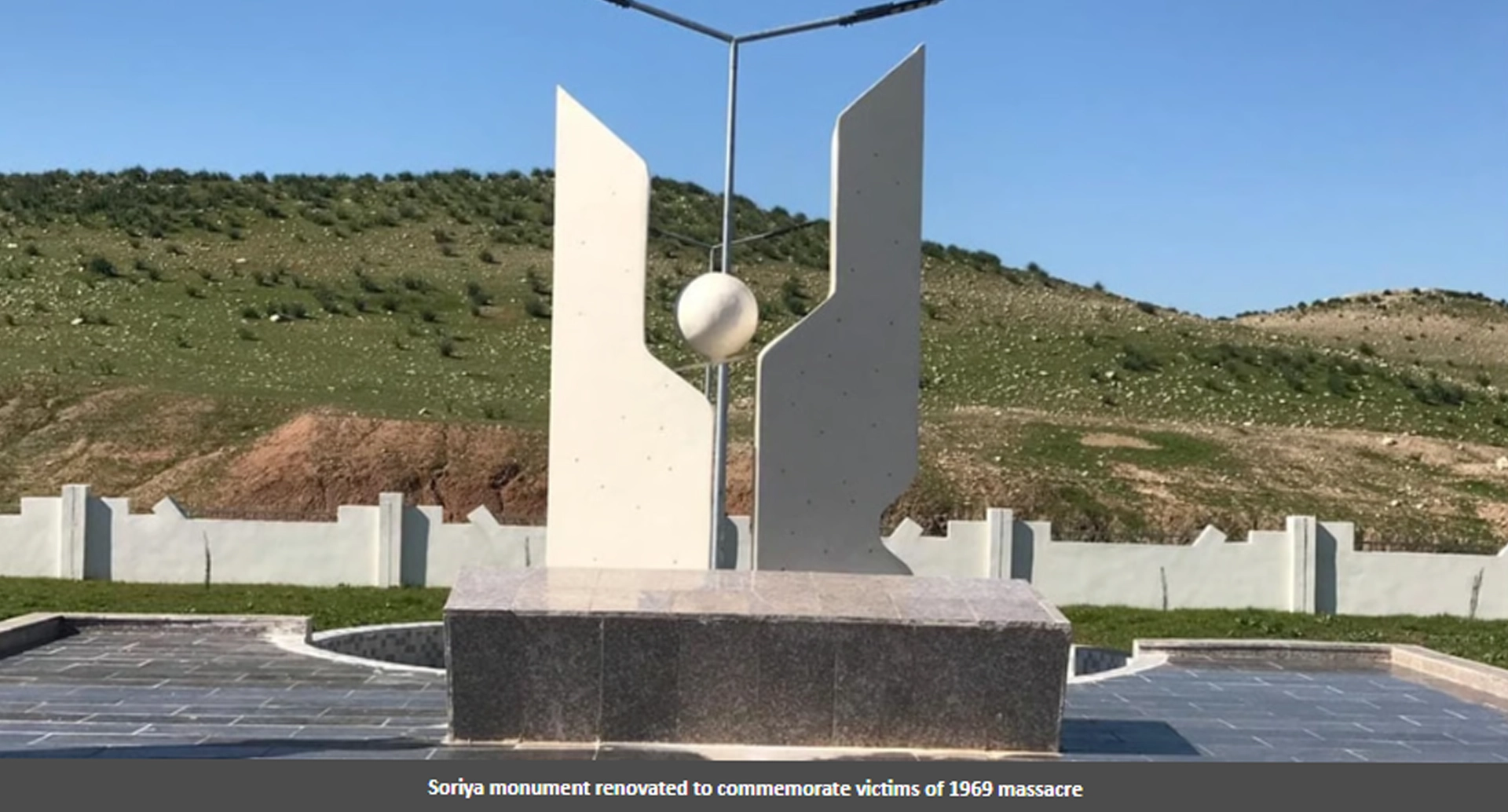
The Soriya Village Massacre of 1969
A Historical, Legal, and Transitional Justice Study
Abstract
The Soriya village massacre, committed on 16 September 1969 by a unit of the Iraqi Army, is one of the early state crimes committed in Kurdistan during the second period of Ba’athist rule, after the Ba’ath Party returned to power on 17 July 1968. The crime took place in a small, multi-community village whose inhabitants included Kurdish Muslim and Christian families living through agriculture, animal husbandry, and peaceful coexistence.
According to the field documentation and records of the Kurdish Genocide National Archive — KGNA, 39 people were killed in the massacre: 25 Christians and 14 Muslims. In addition, 27 people were wounded. This study examines the Soriya massacre within historical, legal, forensic, and transitional justice frameworks, with particular attention to the importance of the mass graves, their discovery, exhumation, identification, and the dignified reburial of the victims’ bodies.
Keywords
Soriya, massacre, Iraqi Army, Kurdistan, Christians, Muslims, mass grave, exhumation, DNA, transitional justice, collective memory.
1. Introduction
Soriya was a small village located in the south-western part of the Silêvana plain, on the bank of the Tigris River. Administratively, it belonged to the al-Asi subdistrict, now known as Batel, in Zakho District, Duhok Governorate, Kurdistan Region of Iraq. Its location near Fishkhabur and the border triangle between Iraq, Turkey, and Syria gave it geographical and strategic significance.
The inhabitants of Soriya formed a small and diverse rural community. Kurdish Muslim and Christian families lived together peacefully. Their daily life was based on agriculture, animal husbandry, and mutual social support. Before the massacre, the village represented a model of coexistence in Kurdistan, where religious and social differences were part of a shared rural life.
The Soriya massacre should not be read as an isolated or minor incident. Rather, it should be understood as one of the early signs of the Iraqi state’s violent policy in Kurdistan — a policy that would later appear more broadly in the destruction of villages, forced displacement, mass graves, chemical attacks, and the Anfal campaign.
2. Historical and Political Background
The Ba’ath Party first came to power in Iraq on 8 February 1963, but that period of rule was short. The party returned to power for a second time on 17 July 1968. The Soriya massacre took place one year later, in 1969, under this second phase of Ba’athist rule.
After 1968, the Iraqi state intensified its military and security control over the Kurdish regions. Areas such as Zakho, Duhok, Fishkhabur, and the border villages were subjected to surveillance and military pressure because of their strategic location. In this climate, many villages were treated through suspicion, intimidation, and collective punishment.
In Soriya, this policy manifested itself in a clear massacre against civilians. The villagers were targeted without trial, without investigation, and without any legally established individual responsibility.
3. The Perpetrating Force
According to the available information, the military unit responsible for the crime was commanded by Lieutenant Abdul Karim Khalil al-Juhaishi, from Mosul. He was known for harsh conduct and hostile behavior toward villagers in the area.
In the villages along the al-Asi–Fishkhabur route, al-Juhaishi and his unit frequently searched homes, intimidated residents, and arrested young men under the pretext of failure to perform military service. As a result, young villagers often hid in orchards, fields, and valleys out of fear of violence.
This background is important because it shows that the Soriya massacre occurred within a pre-existing atmosphere of fear, threat, and collective punishment, rather than as a completely sudden and contextless event.
4. The Events of 16 September 1969
On the morning of Tuesday, 16 September 1969, a military unit moved from its main base in al-Asi toward the village of Fishkhabur, located in the border triangle between Iraq, Turkey, and Syria. The unit was under the command of Lieutenant Abdul Karim al-Juhaishi.
At approximately nine o’clock in the morning, the unit arrived in Soriya. As was customary among the villagers, the people offered water, yogurt, and hospitality to the soldiers. Shortly after the military convoy left the village, a landmine exploded under one of the military vehicles at a distance of around four kilometers. According to the available accounts, the explosion did not cause any deaths.
Instead of opening a legal investigation, al-Juhaishi ordered the unit to return to Soriya. Upon returning, the soldiers surrounded the village and forced the inhabitants to gather in an animal enclosure.
Father Hanna, who had arrived that morning from Zakho by hired jeep for a religious ceremony, stood at the front of the gathering. The village mukhtar was also among the villagers. Their peaceful effort to calm the situation and prevent harm did not succeed.
The military unit then carried out the crime. According to KGNA field documentation, 39 people were killed: 25 Christians and 14 Muslims. Twenty-seven others were wounded. The victims were civilians, including women, children, elderly people, young men, the priest, and the village mukhtar.
5. The Method of the Crime and the Destruction of the Village
The crime in Soriya did not end with the killing of the villagers. The village was looted, agricultural products and houses were burned, and rural life was deliberately disrupted. This pattern shows that the purpose was not merely to punish a few individuals, but to break a civilian community and destroy its sense of safety.
Socially, the crime targeted a village where Muslims and Christians lived together. Historically, Soriya became one of the sites of memory for state crimes committed against the people of Kurdistan. Legally, the actions of that day required investigation, prosecution, and official recognition.
6. Discovery, Exhumation, and Reburial of the Victims
6.1 Discovery and the Beginning of Legal Follow-up
After the fall of the Ba’ath regime and the reopening of many files related to past crimes, the Soriya case came back into public and legal attention. On 1 March 2010, Mr. Sarkis Aghajan met with lawyer Haval Wahab Rashid and discussed legal steps for following up on the Soriya massacre case.
After that meeting, lawyer Haval began a broad search into the massacre. He collected information, documents, evidence, and eyewitness testimonies. These materials were then taken to Baghdad and submitted to the Iraqi High Criminal Court. After reviewing the case, the court assigned an official team consisting of judges, investigators, local officials, and some residents of Soriya to follow up on the case and identify the location of the mass graves.
6.2 Search for the Grave Site
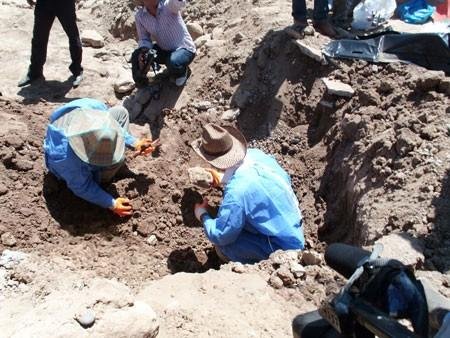
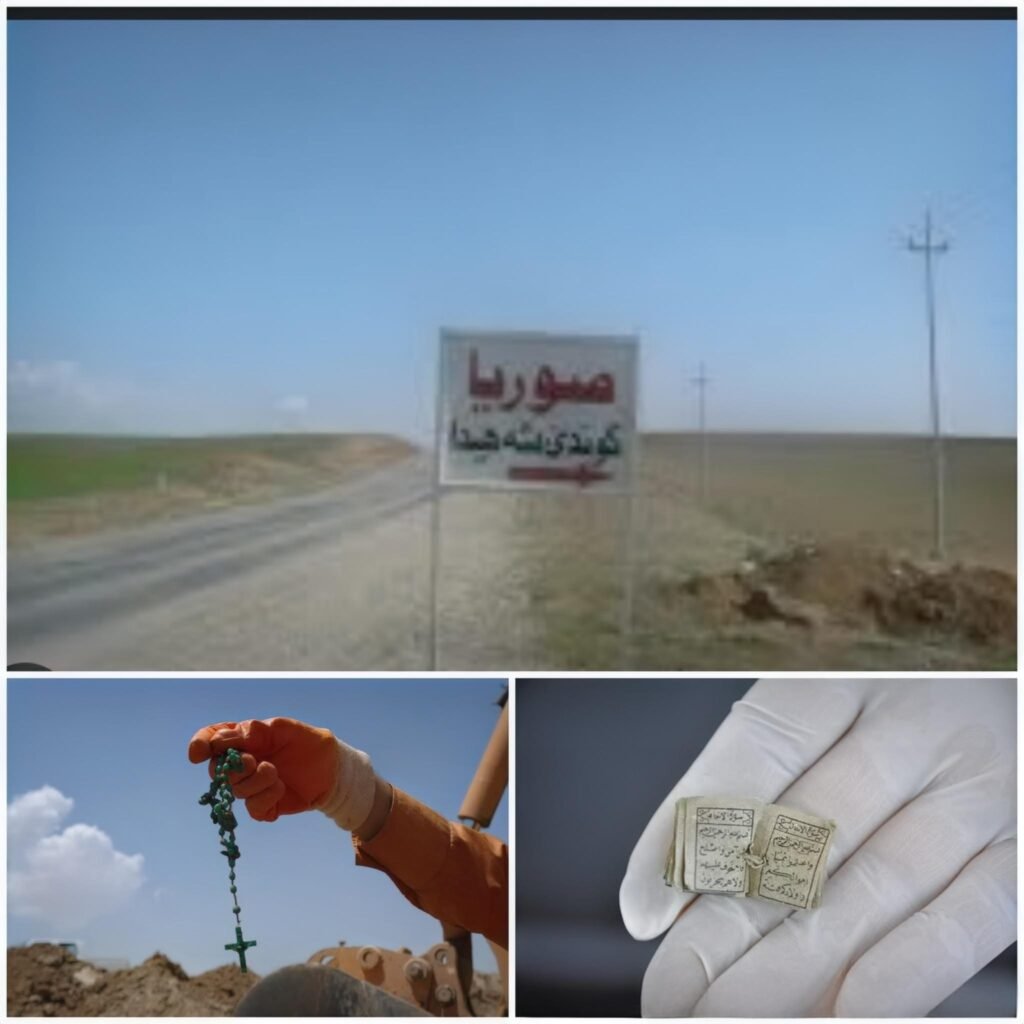
The search for the grave of the Soriya victims began on 14 April 2010. The team arrived in the area with excavation tools and machinery. Local farmers assisted the process, even allowing their wheat fields to be used to help identify the grave’s location.
This stage is highly significant from the perspective of transitional justice. A mass grave is not only a burial place but also material, historical, and forensic evidence of the crime.
6.3 Exhumation of the Mass Grave
On 14 July 2010, the grave was opened in the official presence of judges, investigators, and forensic medical personnel. This day remains important in the memory of Soriya and the families of the victims, because a hidden piece of truth was brought back to light.
After the grave was opened, the bodies of the victims were lifted with scientific care by a specialized team. They were sent to Erbil for forensic examination and DNA testing. The purpose was to identify the victims, determine the causes of death, and submit the findings to the judicial case.
Scientific exhumation is essential in such cases because a mass grave may be the strongest surviving material evidence after many years of concealment. Therefore, careful handling of the grave, protection of evidence, and documentation of each step are central parts of the justice process.
6.4 Reburial and the Ceremony for the Victims
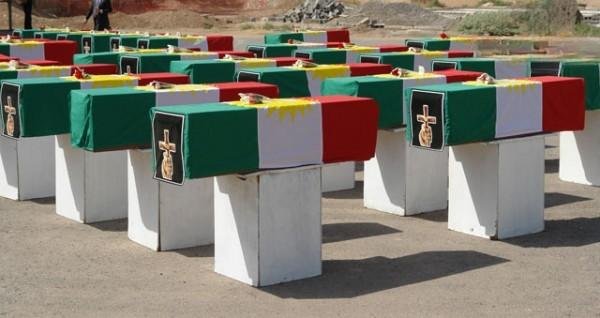
On Friday, 16 September 2011, a solemn ceremony was held for the victims of the Soriya massacre at Duhok Stadium. Coffins containing the mortal bodies of the victims were placed in an organized manner. A cross was placed at the front of the coffins as a symbol of the Christian victims, while the Kurdish Muslim victims were also an essential part of the same shared memory.
Afterward, the victims’ bodies were transferred, accompanied by officials and local people, to the cemetery of Soriya village. Along the road, people from surrounding villages stood in rows, holding flowers in honor of the victims. Finally, the victims were reburied in Soriya, and religious and national ceremonies were held for them.
The reburial was not merely a religious or social act. It was an important step in transitional justice. It restored dignity to the victims, gave the families the right to mourn and know the burial place of their loved ones, and transformed the grave into a place of memory and evidence.
7. Legal Reading
From the perspective of international law, the Soriya massacre can be examined within the framework of international crimes, especially crimes against humanity, because the victims were civilians and the acts were carried out by an official state military force.
Regarding genocide, a careful legal reading is required. In legal terms, genocide requires proof of specific intent: the intent to destroy, in whole or in part, a national, ethnic, racial, or religious group. In the Soriya case, the targeting of Muslims and Christians within a Kurdish village is a significant element of the crime. However, a final legal assessment requires comparison of official documents, survivor testimony, forensic records, and court files.
In any case, this crime was a state crime against civilians and requires official recognition, prosecution, compensation, and preservation of memory.
8. Unfulfilled Justice and State Responsibility
After the fall of the Ba’ath regime, the Soriya case was referred to the Iraqi High Criminal Court. However, like many other cases involving crimes of the former Iraqi regime, the case did not reach full judicial closure. The reduction of the court’s scope and the focus on a limited number of major cases left many cases involving victims in Kurdistan and other communities without complete justice.
Responsibility for the Soriya massacre cannot be reduced to one individual or one military officer. When an official military force, operating within the structure of the state, commits a crime against civilians, the state bears legal, moral, and historical responsibility.
This responsibility must be reflected in official recognition of the crime, compensation for families, protection of the grave and monument, opening of archives, and inclusion of the crime in education and public memory.
9. The Importance of Soriya for Collective Memory
Soriya is not only the name of a village; it is the name of a collective memory. The massacre shows how coexistence in Kurdistan, with all its religious and social diversity, became a target of punishment and violence. The victims of Soriya, Christians and Muslims, shared one fate: a crime committed by the state and remembered by society for decades.
The mass grave of Soriya, its opening, DNA examination, dignified reburial, and the village monument are all parts of the process of restoring truth. This process should not be seen merely as an administrative procedure. It is part of justice, respect for the victims, and the connection of future generations to historical truth.
10. Conclusion
The Soriya village massacre is one of the important and necessary cases for studying the modern history of Kurdistan. The crime took place during the second period of Ba’athist rule and revealed an early form of the Iraqi state’s violent policy against civilians.
Soriya was a multi-community village where Muslims and Christians lived together peacefully. Yet on 16 September 1969, it became a site of massacre, mass burial, and enduring memory. The discovery, exhumation, and reburial of the victims in 2010 and 2011 were important steps in restoring part of the truth. However, full justice still requires official recognition, compensation, access to archives, and the inclusion of this crime in official history and national memory.
Therefore, Soriya must not remain only as an event of the past. It is an open case of justice, a forensic file, a place of memory, and an essential part of the Kurdish Genocide National Archive and the history of crimes committed against the people of Kurdistan.
Leave feedback about this