



A Comparative Historical and Legal Overview
Introduction
Genocide constitutes the gravest form of organized political violence in modern human history. According to the 1948 United Nations Convention on the Prevention and Punishment of the Crime of Genocide, genocide refers to acts committed with the intent to destroy, in whole or in part, a national, ethnic, racial, or religious group.
Historical experience demonstrates that genocide is neither accidental nor a spontaneous eruption of hatred. Rather, it is a structured and cumulative process. It begins with the ideological construction of an internal enemy, legal discrimination, and systematic exclusion. It advances through dehumanization, militarization, and the bureaucratization of violence, culminating in the systematic destruction of life. In many cases, it is followed by denial, historical revisionism, and impunity.
This section provides a comparative overview of major genocides of the twentieth and twenty-first centuries, examining historical context, mechanisms of destruction, and legal recognition.
Major Genocides of the Twentieth Century
The Holocaust (1941–1945)
Background: The Holocaust was a state-organized genocide carried out by Nazi Germany against Jews and other targeted groups, including Roma, persons with disabilities, and political dissidents.
Details: Approximately six million Jews were systematically murdered through mass executions, gas chambers, forced labor, and death marches.
Consequences: The Nuremberg Trials prosecuted leading Nazi officials, and the Holocaust established foundational principles for modern international criminal law and the legal definition of genocide.
The Cambodian Genocide (1975–1979)
Background: Under the leadership of Pol Pot and the Khmer Rouge regime, Cambodia was transformed into an agrarian communist state through violent social engineering.
Details: Between 1.7 and 2 million people died due to mass executions, forced labor, starvation, and inhumane detention conditions.
Consequences: The Extraordinary Chambers in the Courts of Cambodia were established to prosecute senior Khmer Rouge leaders.
The Rwandan Genocide (1994)
Background: Following the assassination of the Rwandan president, extremist Hutu authorities initiated mass killings targeting Tutsi and moderate Hutu civilians.
Details: Over 800,000 people were killed within approximately 100 days. Sexual violence was systematically used as a weapon.
Consequences: The International Criminal Tribunal for Rwanda (ICTR) prosecuted key perpetrators.
The Bosnian Genocide (1992–1995)
Background: Bosnian Serb forces carried out ethnic cleansing campaigns targeting Bosnian Muslims.
Details: Over 100,000 people were killed and thousands displaced. The Srebrenica massacre remains one of the most documented genocidal events in Europe after World War II.
Consequences: The International Criminal Tribunal for the former Yugoslavia (ICTY) prosecuted several senior officials.
The Guatemalan Genocide (1981–1983)
Background: Guatemala’s military regime targeted Maya communities under counterinsurgency operations.
Details: Over 200,000 people were killed or forcibly disappeared.
Consequences: Former President Efraín Ríos Montt was convicted of genocide (though the ruling was later annulled procedurally).
The Armenian Genocide (1915–1917)
Background: The Ottoman Empire carried out mass deportations and killings of Armenians.
Details: Approximately 1.5 million Armenians were killed or forcibly displaced.
Consequences: The genocide remains internationally recognized by many states, though denied by Turkey.
Recognized Kurdish Genocides
The genocide committed against the Kurdish people under the Iraqi Ba’ath regime (1968–2003) was formally recognized through multiple rulings of the Iraqi High Criminal Court (2007–2011).
The Anfal Genocide (1987–1988)
Background: Under Saddam Hussein’s regime, the Iraqi state launched the Anfal campaign aimed at the destruction of Kurdish rural society.
Details: More than 182,000 Kurds were killed or disappeared, 4,500 villages were destroyed, and thousands were forcibly transferred to detention camps. Many victims remain in mass graves.
Judicial Process: The Anfal trial began on August 21, 2006. After 61 court sessions, the Iraqi High Criminal Court issued its ruling on June 24, 2007, recognizing the crimes as genocide and crimes against humanity.
The Barzani Genocide (1983)
Approximately 8,000 Barzani men were forcibly disappeared and later found in mass graves. Women and children were detained in camps under severe conditions.
The case was referred to the Iraqi High Criminal Court in 2010, and in 2011 the Court recognized the crimes as genocide.
The Genocide Against the Faili Kurds (1970s–1980s)
Approximately 23,000 young Faili Kurdish men were executed, sent to minefields, or used for chemical testing during the Iran-Iraq war. Around 750,000 Faili Kurds were forcibly deported and stripped of citizenship.
The case was referred to the Iraqi High Criminal Court on December 21, 2008. On November 29, 2011, the Court recognized the crimes as genocide.
The Halabja Genocide (1988)
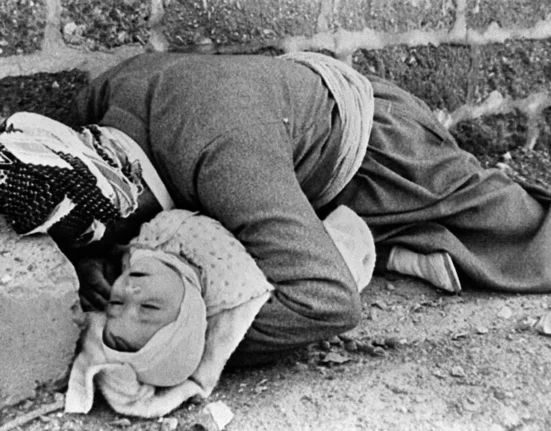
On March 16, 1988, the Iraqi government bombarded the city of Halabja with chemical weapons including mustard gas and nerve agents.
Approximately 5,000 civilians were killed and more than 10,000 injured.
The Halabja case was referred to the Iraqi High Criminal Court in 2007. In 2010, the Court issued a ruling recognizing the chemical attack as genocide.
Official rulings are preserved in both the Iraqi High Criminal Court archive and the Kurdistan Genocide National Archive (KGNA).
The Qarna Massacre (September 2, 1979)
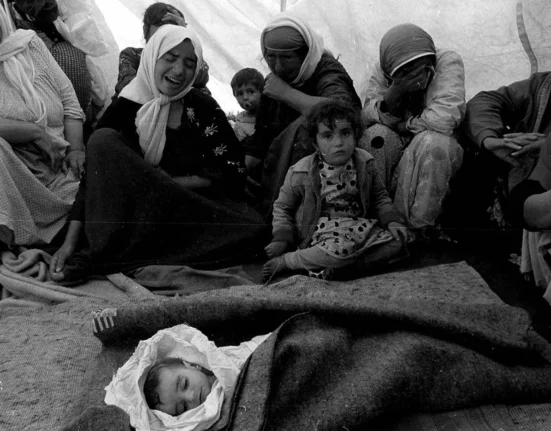
On September 2, 1979, the village of Qarna in Eastern Kurdistan was subjected to a mass killing. Civilians—including religious figures, elders, youth, and children—were executed, some reportedly mutilated. The violence was carried out by forces affiliated with the newly established Islamic Republic authorities, reportedly with the involvement of locally mobilized armed groups.
At the time, due to the transitional instability following the 1979 revolution in Iran, limited media coverage emerged. Nonetheless, even the partial reporting that appeared in the press later served as significant documentation supporting the occurrence of the atrocity.
Despite the gravity of the crime, the Qarna massacre has not received sustained political or legal attention at either domestic or international levels. No comprehensive judicial investigation has been conducted, and the case remains absent from formal accountability mechanisms. The lack of legal recognition or adjudication has contributed to its marginalization within broader discussions of mass atrocities against Kurds.
The Qarna massacre of 1979 remains an unresolved case within the historical record of violence against Kurdish civilians.
Genocide and Major Atrocities in the 21st Century
Although comparatively fewer cases in the twenty-first century have obtained formal legal recognition as genocide, several major atrocities have been classified as genocide by national courts and international
Darfur (2003– )
Background (2003):
Conflict erupted in Sudan’s Darfur region in 2003, with state-backed forces and Janjaweed militias conducting coordinated attacks against civilians.
Mechanisms:
Mass killing, village destruction, forced displacement, and widespread sexual violence.
Legal Status:
The International Criminal Court (ICC) issued arrest warrants against Sudanese President Omar al-Bashir (2009–2010) including charges of genocide. Legal proceedings remain ongoing.
The Yazidi Genocide (2014– )
Background (2014):
In August 2014, ISIS launched a systematic attack against the Yazidi population in Sinjar (Shingal), targeting them on religious grounds.
Mechanisms:
Mass executions of men, abduction and enslavement of women and children, systematic sexual violence, forced religious conversion, and destruction of cultural and religious heritage.
Legal Recognition:
Recognized as genocide by several national parliaments and through landmark national court rulings, including a significant conviction in Germany (2021).
The Rohingya (2017– )
Background (2017):
In August 2017, Myanmar’s military launched operations in Rakhine State targeting the Rohingya population.
Mechanisms:
Mass killings, village burnings, systematic sexual violence, and forced displacement of over one million people to Bangladesh.
Legal Status:
Proceedings were initiated before the International Court of Justice (ICJ) in 2019. Final legal determination remains pending.
The Uyghurs in China (2017– )
Background (2017 onward):
Large-scale detention and re-education policies were implemented in Xinjiang.
Mechanisms:
Mass detention, coercive birth control policies, forced labor, and cultural and religious repression.
Legal Status:
Several states have described the situation as genocide; however, no binding international judicial ruling has yet been issued.
Structural Patterns
Comparative genocide studies identify recurring structural elements:
- Ideological construction of an internal enemy
- Legal marginalization and exclusion
- Propaganda and normalization of hatred
- Militarization of state institutions
- Mass killing, forced displacement, sexual violence
- Post-crime denial
Understanding these patterns is essential for prevention and accountability.
Conclusion
Genocide is neither accidental nor inevitable. It emerges from political structures, exclusionary ideologies, and the absence of accountability.
Comparative documentation serves not only as historical record but as a safeguard against recurrence.
The preservation of judicial rulings, survivor testimonies, and forensic evidence remains central to global efforts toward justice and memory.
References
(Academic, Legal, Archival, and Transitional Justice Sources)
Akayesu Case (Prosecutor v. Jean-Paul Akayesu), ICTR-96-4-T, International Criminal Tribunal for Rwanda, Judgment of 2 September 1998.
Al-Bashir Case (Prosecutor v. Omar Hassan Ahmad Al-Bashir), ICC-02/05-01/09, International Criminal Court, Arrest Warrants issued 2009–2010.
Bassiouni, M. Cherif. Crimes Against Humanity in International Criminal Law. The Hague: Kluwer Law International, 1999.
Coalition Provisional Authority (CPA). Statute of the Iraqi Special Tribunal. CPA Order No. 48, 10 December 2003.
Dadrian, Vahakn N. The History of the Armenian Genocide. Providence: Berghahn Books, 1995.
Hilberg, Raul. The Destruction of the European Jews. New York: Holmes & Meier, 1985.
Human Rights Watch. Genocide in Iraq: The Anfal Campaign Against the Kurds. New York: HRW, 1993.
International Center for Transitional Justice (ICTJ). The Iraqi High Tribunal and the Trials of Saddam Hussein: Lessons for Transitional Justice. New York: ICTJ, 2005.
International Court of Justice. Application of the Convention on the Prevention and Punishment of the Crime of Genocide (Bosnia and Herzegovina v. Serbia and Montenegro). Judgment of 26 February 2007.
International Criminal Tribunal for the former Yugoslavia (ICTY). Prosecutor v. Radislav Krstić. Judgment, 2001.
Iraqi High Criminal Court. Al-Anfal Case Judgment. Baghdad, 24 June 2007.
Iraqi High Criminal Court. Barzani Case Judgment. Baghdad, 2011.
Iraqi High Criminal Court. Faili Kurds Case Judgment. Baghdad, 29 November 2011.
Iraqi High Criminal Court. Halabja Chemical Attack Case Judgment. Baghdad, 2010.
Kiernan, Ben. Blood and Soil: A World History of Genocide and Extermination from Sparta to Darfur. New Haven: Yale University Press, 2007.
Lemkin, Raphael. Axis Rule in Occupied Europe. Washington, DC: Carnegie Endowment for International Peace, 1944.
Mann, Michael. The Dark Side of Democracy: Explaining Ethnic Cleansing. Cambridge: Cambridge University Press, 2005.
Power, Samantha. A Problem from Hell: America and the Age of Genocide. New York: Basic Books, 2002.
Regime Crimes Liaison Office (RCLO). Selected Documentation and Evidentiary Materials from Iraqi Ba’ath Regime Archives. Baghdad, 2004–2010.
Schabas, William A. Genocide in International Law: The Crime of Crimes. Cambridge: Cambridge University Press, 2009.
United Nations. Convention on the Prevention and Punishment of the Crime of Genocide. Adopted 9 December 1948.
United Nations Independent International Commission of Inquiry on the Syrian Arab Republic. “They Came to Destroy”: ISIS Crimes Against the Yazidis. 2016.
United Nations Fact-Finding Mission on Myanmar. Report of the Independent International Fact-Finding Mission on Myanmar. 2018.
United Nations OHCHR. Assessment of Human Rights Concerns in the Xinjiang Uyghur Autonomous Region. 2022.
UNITAD. Reports on ISIL Crimes Against the Yazidi Community. 2018–2023.
Kurdistan Genocide National Archive (KGNA). Certified Court Judgments and Archival Documentation on Recognized Kurdish Genocide Cases. Erbil.
Leave feedback about this