


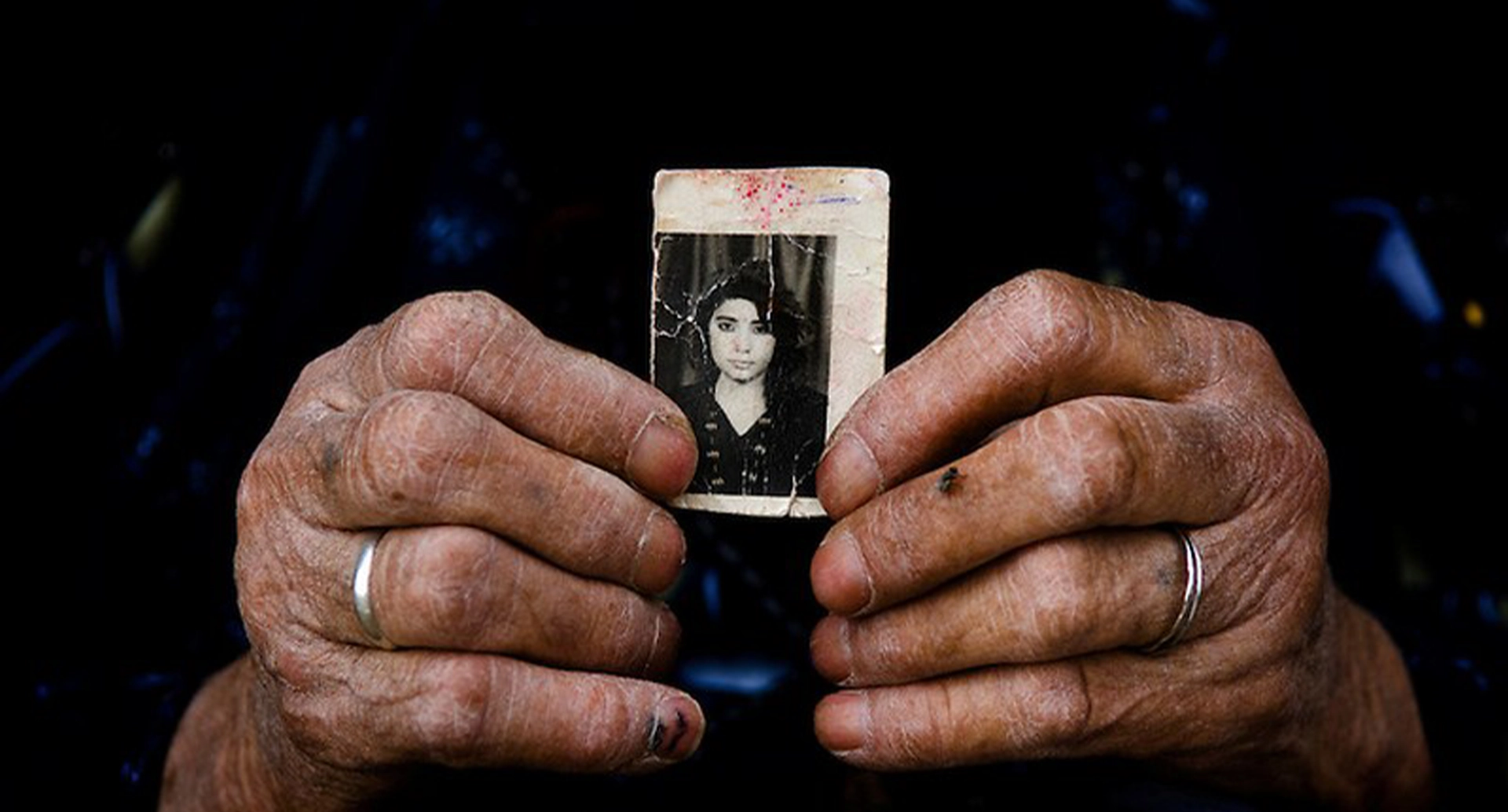
The 5th, 6th, 7th phases of the Anfal Genocide 1988
In the Valleys and Mountains of Shaqlawa and Rawanduz (15 May – 25 August 1988)
The Anfal Genocide was a series of organized intelligence and military campaigns, planned and implemented administratively, economically, and logistically under the name of the Anfal operations. These operations were carried out by the Iraqi state during the Ba’ath regime, under the leadership of Saddam Hussein, against the Kurdish population in Iraqi Kurdistan.
The Anfal campaigns continued in eight phases across Kurdistan from 23 February to 6 September 1988. As a result, they involved the forced displacement of civilians, enforced disappearances, deportations, mass population transfers, widespread destruction and demolition of approximately 4,500 villages, chemical bombardments in various areas, and mass killings.
During the Anfal campaigns, more than 182,000 Kurds were subjected to genocide. After the fall of the Ba’ath regime, the fate of many victims became evident through the discovery of mass graves. However, the exhumation and identification processes of these mass graves remain incomplete to this day.
The 5th, 6th, 7th phases of the Anfal Genocide
The Valleys and Mountains of Shaqlawa and Rawanduz (15 May – 25 Aug 1988)
One week after the end of the Fourth Phase of the Anfal operations—during which the Ba‘ath regime had occupied vast areas of Kurdistan, destroyed villages, and forcibly displaced their inhabitants—the regime launched a new offensive targeting the rugged mountain regions of Shaqlawa and Rawanduz.
The operation was commanded by Brigadier General Barq ‘Abdullah al-Hajj Hantah, head of the Oil Protection and Special Forces, assisted by Colonel Fuad Hussein ‘Ali and Major Hashim Kamil Mahmoud, under the direct supervision of Major General Yunis Muhammad al-Zarb, commander of the Fifth Corps, in coordination with the First Corps under Lt. General Sultan Hashim.
A classified document from the Iraqi Ministry of Defense, Office of the Chief of Staff (No. 30/1545, dated 22 May 1988), signed by Lt. Gen. Nabil ‘Abdul Qadir Hussein, stated:
“Chemical weapons were used on 15 May 1988 against rebel positions within the Fifth Corps sector.”
By mid-May 1988, the Anfal operations reached the Balîsan Valley and its surrounding areas, where the Iraqi army carried out intense chemical bombardments on the villages of Warê, Nazanin, Kamûsek, Aspindar, ‘Alyaweh, Smaqûlî, and Bûnê.
In Warê alone, 36 civilians were killed. A survivor recalled:
“When we went to help the people of Warê, we saw four or five bodies lying in the stream. The food was still on the fire inside the homes, and the livestock were dead in the courtyards.”
A woman from the village testified that the aircraft “dropped chemical bombs that sounded like a car speeding by before exploding.”
On 23 May, the bombing continued on Balîsan, Hîran, and nearby villages, killing several Peshmerga fighters.
The Iraqi army launched multiple ground assaults:
- From Garawan toward Hendrin and Karokh,
- From Helamund toward Wartê, Zinê, Sari Ahmad, Derbi, Jawal, Dara, and Kalita, bombing Wartê with chemicals on 23 May,
- And from Chawa, Bani Harir, and Khalifan in a spiral pattern.
These offensives displaced over 720 Kurdish families and destroyed their property. Many detainees were later taken to Spîlk Camp and the Erbil Security Prison. However, unlike earlier phases, the Iraqi forces failed to prevent civilians from fleeing; many crossed the border into Iran, undermining the regime’s military objectives.
Ba‘ath regime documents later acknowledged that the Fifth Anfal failed to achieve its strategic goals, as stated in a secret report titled “Failure of the Final Anfal Operations” submitted by Major General Yunis al-Zarb, noting the difficult terrain and strong Kurdish resistance.
After the Fifth Anfal ended on 7 June 1988, preparations began for the Sixth Phase. In a confidential report (No. 1475, dated 30 May 1988) to the General Staff, al-Zarb described plans for a “cleansing operation” in the Balîsan and Alan valleys. Though he later requested a delay, the General Staff ordered immediate execution (Letter No. 519, 7 June 1988).
The main obstacle was the Peshmerga’s strongholds in the Korak Mountains, reaching elevations of 7,000 meters, making access extremely difficult. Reports confirm that Saddam Hussein personally oversaw these operations. A Top Secret memorandum (No. 14671, 16 July 1988) from the Presidential Office to the General Staff described “field difficulties requiring direct presidential supervision.”
On 20 July 1988, the General Staff issued another directive (No. 861) stating:
“The Anfal operations must resume after Eid al-Adha with greater force and expanded scope.”
Although Eid had passed, the attacks were postponed. A meeting on 29 July 1988 at the First Corps Headquarters in Kirkuk (Memo No. 943) ordered the temporary suspension of the Sixth and Seventh Anfal operations pending logistical readiness.
This period marked one of the darkest and most dangerous times for the people of Kurdistan, coinciding with the end of the Iran–Iraq War. On 17 July 1988, Iran accepted UN Security Council Resolution 598, and the ceasefire was officially declared on 8 August 1988, leading to reduced morale among the Peshmerga.
Soon after, the Iraqi Air Force carried out another massive chemical bombardment on Balîsan, Malakan, Wartê, Hîran, and Smaqûlî, killing hundreds.
Government-appointed local officials (Mukhtars) urged residents to surrender, promising amnesty, but those who complied were later executed or forcibly disappeared.
Estimates indicate that across the Fifth, Sixth, and Seventh Anfal phases, more than 52 villages in the districts of Khalifan, Rawanduz, and Khushnawti were destroyed, 2,602 families displaced, 24 schools and 52 mosques demolished, and hundreds of trees and orchards—once vital sources of livelihood—were burned to the ground.
In the Anfal Genocide, the Iraqi regime’s primary intent and objective was the destruction and annihilation of the Kurdish people and their identity. This was manifested through large-scale attacks on Kurdish villages, the use of chemical weapons, mass killings, and the forced displacement and deportation of tens of thousands of Kurds, without distinction of religion, gender, or age. Women, men, children, the elderly, and youth were brutally rounded up and transferred to military camps and detention facilities, where many, after severe torture and abuse, were either executed, buried alive in mass graves, or forcibly disappeared.
Sources:
-
-
-
Official documents of the collapsed Ba‘ath regime.
-
-
-
MEW, The Genocide in Iraq and the Anfal Campaign against the Kurds.
-
-
-
Documents of the Political Bureau of the Kurdistan Democratic Party.
-
-
-
Field investigations and research (follow-up and interviews).
-
-
-
Magazines and newspapers of the Ba‘ath era.
-
Remark on terminology:
The terms used by the Ba‘ath regime in its documents — such as “(hireling/mercenary), (saboteur), “criminal,” and many other degrading labels — were applied to any Kurd (except the collaborators known as “Jash”), whether Peshmerga or civilian. In this text, these terms are quoted exactly as they appear in the original documents, to preserve the historical record and reveal the dehumanizing language used by the regime as part of its genocidal policy. -
Leave feedback about this