


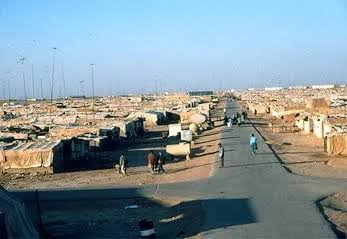
The Rafha Case under the Political Prisoners Law and Transitional Justice in Iraq
Introduction
Following the fall of the Ba’ath regime in 2003, the Iraqi state enacted some laws and established institutions for the recognition and compensation of victims of the former regime. The inclusion of Rafha detainees within the Political Prisoners Foundation Law was one of the measures adopted as part of Iraq’s transitional justice process.
The rights and monthly payments granted to Rafha detainees were not established through an independent law specifically dedicated to Rafha. Rather, they were brought within the scope of the Political Prisoners Foundation Law through Law No. 35 of 2013, the First Amendment to Political Prisoners Foundation Law No. 4 of 2006.
However, the manner in which compensation laws were enacted and implemented demonstrates that the Iraqi state and its federal institutions did not apply equal standards to all victims of the Ba’ath regime. Special laws and amendments were enacted for certain groups, granting them individual monthly payments, financial benefits and other privileges. By contrast, thousands of Kurdish families who were displaced, forcibly transferred, expelled or compelled to seek refuge abroad as a result of the policies of the Ba’ath regime between 1968 and 2003 were not covered by an equivalent and comprehensive legal framework.
Law No. 35 of 2013 expressly refers to victims of the Halabja chemical attack who fled to Iran because of the chemical bombardment. Nevertheless, this provision has not been implemented for the displaced Halabja victims concerned. This represents a clear example of the difference between recognising a right in the text of a law and implementing that right in practice.
This article explains how Rafha detainees were included within the Political Prisoners Foundation Law, the rights and monthly payments granted to them, Council of Ministers Decision No. 27 of 2020 and its subsequent repeal. It also examines inequality in Iraq’s compensation policies and the shortcomings in the implementation of transitional justice concerning Kurdish citizens who were displaced, expelled or forced into exile during the period of Ba’ath rule.
Moreover, to date, transitional justice has not been implemented in any of the cases of genocide committed against the Kurdish people. Victims and their families continue to be denied their fundamental rights, including truth-seeking, accountability, reparation, restoration of rights and guarantees of non-recurrence.
The rights and monthly payments granted to Rafha detainees were not established through a separate law specifically dedicated to Rafha. Rather, they were brought within the scope of the Political Prisoners Foundation Law through Law No. 35 of 2013, the First Amendment to Political Prisoners Foundation Law No. 4 of 2006.
The inclusion of Rafha detainees under this law forms part of Iraq’s post-2003 transitional justice framework. However, it also raises questions about equality in the recognition and compensation of all persons who were displaced, persecuted or forced into exile as a result of the policies of the Ba’ath regime between 1968 and 2003.
This discussion does not seek to oppose, diminish or deny the rights and compensation of those covered by the legal provisions relating to the Rafha case. Rather, its purpose is to highlight the unequal treatment of the different categories of victims of crimes committed by the Ba’ath regime.
The conditions in displacement and refugee camps in different countries were similar in many respects, particularly in terms of shortages of basic necessities, restrictions on movement and mobility, lack of adequate shelter and uncertainty about the future. According to the available information, a significant number of the refugees in the Rafha camp were later resettled in third countries.
However, displaced Kurdish families and Kurdish refugees in 1974, 1988 and 1991 faced some of the most severe humanitarian disasters of that period. An official UNHCR review reported that, by 3 April 1991, more than 200,000 Kurdish refugees were stranded in the mountainous border area between Iraq and Türkiye under extremely harsh conditions. On 7 April, the Turkish Ministry of Foreign Affairs also reported that 1,500 refugees had died within only three days as a result of cold weather, lack of shelter and severe climatic conditions. This represents only a small example of the extensive international documentation and reporting that recorded the scale of the Kurdish displacement and refugee crisis.
The central issue, therefore, is not the compensation granted to one particular group. Rather, it is the failure of the Iraqi state to apply equal standards of recognition, reparation and transitional justice to all victims of crimes committed by the Ba’ath regime. This also includes Kurdish families who were displaced, expelled or forcibly transferred, as well as those compelled to seek refuge and live outside the country, particularly those who fled to Iran and Türkiye and remained stranded between the borders for extended periods. Thousands lost their lives during their displacement as a result of exposure, lack of shelter, cold, hunger and disease.
Moreover, the victims of the cases of genocide committed against the Kurdish people, as well as their families, have not yet been included within an equal legal framework of transitional justice.
Who is considered a Rafha detainee under the law?
The 2013 amendment defines the Rafha detainees, in substance, as follows:
Rafha detainees are the activists of the 1991 Sha’ban Uprising who were compelled by oppression and persecution to leave the Republic of Iraq and travel to the Kingdom of Saudi Arabia, together with the families who accompanied them and those born inside the detention camps, according to verified official international records and data. The definition also includes victims of Halabja who sought refuge in the Islamic Republic of Iran because they were bombarded with chemical weapons by the former regime.
This is an English translation of the substance of the official Arabic definition.
The law therefore covers not only participants in the 1991 uprising, but also the family members who accompanied them to Saudi Arabia and children born inside the camps. The principal condition is that each person must be identified in verified official records.
The reference to Halabja in the law
The law expressly refers to victims of the Halabja chemical attack who fled to Iran because of the attack.
The provision does not include every victim of the Halabja chemical attack. It specifically concerns persons who:
- Were victims of the Halabja chemical attack;
- Fled to Iran as a consequence of the attack; and
- Possess verified official documentation.
Mentioning this category does not merge the Rafha case with the genocide case of Halabja. It is included in this article solely because the Political Prisoners Foundation Law itself expressly names this limited category of displaced Halabja victims.
The Halabja chemical attack has its own legal and judicial status. The present discussion is confined to explaining the provision that includes Halabja victims who sought refuge in Iran.
Is the entitlement individual or family-based?
The wording of the law indicates that recognition is individual. The definition expressly includes accompanying family members and children born inside the camps as persons covered by the Rafha category.
Accordingly, where each family member:
- Is individually named in the official records;
- Has had the supporting evidence verified; and
- Has received a separate decision confirming legal eligibility;
the entitlement is calculated in that person’s own name.
Therefore, where a family consists of five persons and all five possess separate decisions confirming eligibility, each may qualify for an individual monthly payment.
Being a member of a Rafha family is not, by itself, sufficient. Each person must be individually registered and legally recognised.
How is the payment calculated under the law?
Law No. 35 of 2013 does not permanently fix the payment at one million Iraqi dinars per person.
Article 17 of the amended law establishes the following framework:
Political prisoners
The monthly payment of a recognised political prisoner must not be less than three times the minimum retirement pension established under the Unified Pension Law.
The minimum monthly payment is increased by 60,000 Iraqi dinars for every complete year actually spent in prison or detention. An additional 5,000 dinars is calculated for every month, and half a month is treated as a full month.
Political detention lasting more than one year
A recognised political detainee whose period of detention exceeds one year receives most of the rights and privileges granted to a political prisoner.
Detention lasting from six to eleven months
The person receives a pension equivalent to twice the minimum retirement pension.
Detention lasting from one to five months
The person receives a pension equivalent to the minimum retirement pension.
Detention lasting for less than one month
The person receives a one-time financial grant of five million Iraqi dinars.
Rafha detainees
Article 17(9) provides that Rafha detainees receive the rights and privileges granted to political detainees from the date on which Political Prisoners Foundation Law No. 4 of 2006 entered into force.
The legally prescribed amount must therefore be calculated according to the statutory formula and the applicable minimum retirement pension, rather than treated as a permanently fixed payment of one million dinars.
Council of Ministers Decision No. 27 of 2020
In 2020, the Iraqi Council of Ministers issued Decision No. 27. According to the publicly announced implementation measures, the decision imposed a number of restrictions on the payments and financial entitlements of Rafha detainees:
- The monthly payment could not exceed one million Iraqi dinars;
- Only one person from each family could receive the payment;
- That person had to be the head of the household;
- The beneficiary had to reside inside Iraq;
- The beneficiary could not receive another state salary or income;
- The rules preventing the receipt of more than one state salary were to be applied.
In September 2020, the National Pension Authority announced the release of the first group of payments under Decision No. 27 after data verification and the application of rules retaining only one state payment for each pensioner.
The claim that each family was entitled to only one payment of one million dinars therefore originated from the restrictions introduced by Decision No. 27 of 2020, rather than from the original wording of the 2013 law.
Repeal of Decision No. 27
In March 2021, the Council of Ministers repealed Decision No. 27 of 2020, except for the paragraph concerning the implementation of Article 10 of the Unified Pension Law, which prohibits the receipt of two or more state salaries.
The Political Prisoners Foundation announced that the payments and financial entitlements of Rafha detainees would be restored retroactively.
The repeal followed the Iraqi Parliament’s decision of 11 January 2021 to reject, in principle, the proposed incorporation of the restrictions into an amendment of the Political Prisoners Foundation Law.
As a result, the one-million-dinar ceiling, the restriction limiting payment to the head of the household and the requirement of residence inside Iraq did not remain in force in the form established by Decision No. 27.
The general prohibition against receiving more than one state salary, however, remained applicable.
The Second Amendment of 2025
Law No. 10 of 2025, the Second Amendment to the Political Prisoners Foundation Law, was published in Issue No. 4841 of Al-Waqa’i al-Iraqiya on 22 September 2025.
It now forms part of the current legal framework governing the Foundation. The provisions translated and analysed in this article concerning the definition of Rafha detainees and the payment framework are taken directly from the First Amendment of 2013.
For the official determination of an individual claim in 2026, the consolidated law, the 2025 amendment and the current implementing instructions should be examined together.
Rafha detainees and the broader issue of forced displacement, 1968–2003
This article does not compare the Rafha case with the Anfal Genocide or with the separate legal case of the Halabja chemical attack.
The central issue is the broader policy of forced displacement, exile and refugee flight caused by the Ba’ath regime between 1968 and 2003.
The inclusion of Rafha detainees in the Political Prisoners Foundation Law demonstrates that displacement and exile resulting from persecution by the former regime may constitute a legal basis for official recognition, continuing payments and state benefits.
The law also expressly includes the displaced victims of Halabja who sought refuge in Iran. Forced displacement in Kurdistan, however, was not limited to that category.
Between 1968 and 2003, large numbers of Kurdish families were:
- Expelled or transferred from their original villages and areas;
- Internally displaced within Iraq;
- Forced to seek refuge in Iran, Türkiye and other countries;
- Deprived of their homes, property, land and sources of livelihood;
- Transferred to compulsory settlements and camps;
- Prevented for long periods from returning safely to their places of origin.
Where displacement, departure from Iraq and refugee flight caused by persecution under the Ba’ath regime constitute a legal basis for compensation, the same standard should be applied to all persons displaced by state policies during the same period.
Transitional justice and unequal compensation
Transitional justice cannot be completed merely by prosecuting a number of officials of the former regime. It should also include:
- Official recognition of all victims;
- Material and moral reparation;
- Restitution of property and land;
- Documentation of displaced and expelled families;
- Assistance with safe return;
- Measures addressing long-term social, economic and psychological harm;
- Institutional reform and guarantees of non-recurrence.
From a critical transitional-justice perspective, Iraq’s post-2003 compensation system has not been implemented equally for all victims of the Ba’ath regime.
Certain groups were granted special legislation, continuing individual payments and extensive privileges. By contrast, Kurdish families displaced, transferred or forced into exile between 1968 and 2003 have not all been covered by an equivalent and comprehensive federal legal framework.
This criticism does not seek to deny or reduce the rights of Rafha detainees. It calls for the same principles of equality, state responsibility and reparation to be extended to all victims of state-sponsored forced displacement.
Justice should not be determined by political, ethnic, sectarian or regional proximity. The Iraqi state remains responsible for addressing the circumstances of all persons displaced or forced into exile by the policies and actions of the Ba’ath regime.
Conclusion
Law No. 35 of 2013 brought Rafha detainees, their accompanying families, children born inside the camps, and a specific category of displaced Halabja victims who fled to Iran within the scope of the Political Prisoners Foundation Law.
The financial entitlement is, in principle, individual. The amount of one million Iraqi dinars was not permanently established by the law itself.
The one-million-dinar ceiling and the restriction limiting payment to one person per family originated from Council of Ministers Decision No. 27 of 2020. The decision was repealed in 2021, except for the general prohibition against receiving more than one state salary.
From the perspective of transitional justice, recognition and compensation should not be restricted to one camp, one uprising or one selected category. The circumstances of all Kurdish and Iraqi citizens displaced, transferred or forced into exile by the Ba’ath regime between 1968 and 2003 should be documented and addressed through a comprehensive and non-discriminatory legal framework.
Note: This article is an English translation and analytical explanation of the provisions and decisions directly relevant to Rafha detainees, payments, Decision No. 27, and displaced Halabja victims. For official legal purposes, the binding text is the original Arabic version published in the Official Gazette of Iraq, Al-Waqa’i al-Iraqiya.
Leave feedback about this